Free Consultations 682-936-4003

Recent Blog Posts
Will I Be Convicted of DWI if I Failed the Breath Test in Texas?
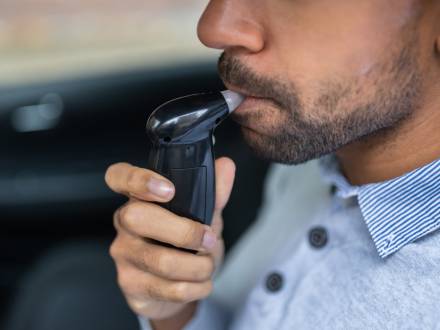
Failing a breath test does not guarantee a DWI conviction in Texas. Even if your results show an alcohol level above the legal limit, prosecutors must still prove that you were driving while intoxicated. Breath test results can also be challenged when there are problems with the equipment or testing process.
If you are facing charges in 2026, our Hood County DWI defense lawyer can review the evidence and help you build your defense strategy.
What Does Texas Have to Prove in a DWI Case?
Under Texas Penal Code § 49.04, driving while intoxicated (DWI) applies when a person is intoxicated while operating a motor vehicle in a public place. Under Texas law, prosecutors can prove intoxication in two ways. They can show that your alcohol concentration was 0.08 or higher. They can also show that alcohol or another substance caused you to lose the normal use of your mental or physical abilities.
How Do Prior Assault Convictions Affect a New Texas Assault Charge?
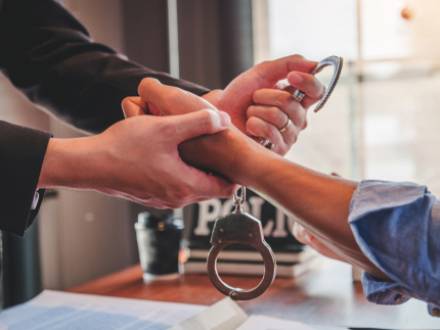 Prior assault convictions change a new Texas assault charge in two different ways. One raises the level of the offense itself, turning a misdemeanor into a felony. The other leaves the charge as-is but raises the punishment range attached to it. Which one applies depends mostly on whether family violence is involved. If you are facing a new charge in 2026, a Hood County criminal defense lawyer can look at whether your old case actually qualifies as an enhancement.
When Does an Assault Charge Become a Felony in Texas?
Assault causing bodily injury is defined in Texas Penal Code Section 22.01. On its own, it is a Class A misdemeanor, punishable by up to one year in county jail and a fine of up to $4,000.
That changes under Section 22.01(b)(2)(A). If the alleged victim is a family member, a household member, or someone you are or were dating, and you have a prior qualifying conviction involving a family member, household member, or dating partner, the new charge becomes a third-degree felony. The range jumps to two to 10 years in prison and a fine of up to $10,000.
How Does Consent Affect a Texas Sex Crime Case?
 Consent can be a central issue in a Texas sex crime case. Many charges hinge entirely on whether the alleged victim actually agreed to the conduct in question. A genuine, reasonable belief that consent was given can significantly affect how a case unfolds. If you’re facing a charge related to sexual conduct in 2026, our Hood County, TX criminal defense lawyer can help you understand exactly how consent factors into your case. We can also explain what that means for your defense.
How Does Texas Law Define Consent in Sex Crime Cases?
Texas addresses sexual assault under Texas Penal Code Section 22.011. This law specifically lists circumstances under which an act is considered to be without consent. These circumstances include situations where force or threats were used, where the alleged victim was unconscious or physically unable to resist, or where the alleged victim was unaware that the sexual act was occurring.
Can I Get a DWI Dismissed if It’s My First One? | TX Lawyer
 Some first-time DWI charges in Texas can be dismissed, depending on the facts and the evidence. The prosecution has to prove every element of the charge beyond a reasonable doubt. There are real ways to challenge that evidence. If you are facing a first DWI in 2026, a Hood County, TX criminal defense lawyer can look at the details of your case and help you understand your legal options.
Under Texas Penal Code Section 49.04, a first-offense DWI is a Class B misdemeanor. That means up to 180 days in jail, a fine of up to $2,000, and a driver's license suspension. If your BAC was 0.15 or higher, the charge can be elevated to a Class A misdemeanor with higher penalties. These are not small stakes, which is exactly why understanding how to fight the charge matters so much.
How Are Sexual Assault Allegations Proven in Texas?
 A sexual assault charge in Texas requires the prosecution to prove every element of the case beyond a reasonable doubt. That is the highest standard of proof in the legal system, and meeting it is not always straightforward.
Being charged is not the same as being convicted, and understanding how the state builds its case is the first step toward building your defense. If you are facing a charge like this in 2026, the Hood County, TX criminal defense lawyer at The Law Offices of Rob Christian is here to help you understand what the prosecution has to do and what options you may have.
What Does the Prosecution Have To Prove in a Texas Sexual Assault Case?
To convict someone of sexual assault in Texas, the jury has to be firmly convinced that the defendant committed the offense. If there is a reasonable explanation for what happened that does not involve a crime, the jury is supposed to find you not guilty.
How Do You Fight a Murder Charge in Texas?
 Facing a murder charge in Texas is overwhelming and frightening. You may feel confused about what happens next. Fighting a murder charge starts with understanding what the state must prove and how defenses are built.
In 2025, the FBI released national crime data showing that murder and nonnegligent manslaughter rates declined significantly compared to prior years. Even with that trend, murder charges remain among the most aggressively prosecuted cases in Texas.
As of 2026, Texas courts continue to treat murder cases with intense scrutiny, and early decisions often shape how the case unfolds. If you or a loved one are accused, speaking with a Hood County, TX murder defense lawyer can help you protect your rights and begin preparing a defense.
Should Innocent Defendants Ever Take a Plea Deal in Texas?
 Pleading guilty to a crime you did not commit sounds unthinkable for most people. Yet in Texas, innocent people accept plea deals every day for a variety of very valid reasons. In Texas – and across the United States – the criminal justice system resolves most cases through negotiated pleas rather than jury trials. According to the American Bar Association, about 98 percent of all federal cases and between 90 and 95 percent of all state-level cases are resolved through plea bargaining.
For those who are guilty of the criminal offense they are charged with, a plea deal can result in less time than they would likely have received at trial. For the truly innocent person, however, the question of whether he or she should accept a plea bargain is a far more complex question. A Hood County, TX criminal defense lawyer can help you understand the risks, pressures, and possible consequences that allow you to make the most informed decision for your future.
Geofence Warrants in Texas: Are Police Crossing the Line?
 Imagine the police showing up at your home, bashing in the door, and placing you under arrest based on a geofence warrant. You may have had absolutely nothing to do with the crime committed, yet the police believe your phone data places you in the vicinity of the crime scene. This is not science fiction; it is the new reality of geofence warrants. In Texas and across the United States, law enforcement is increasingly using geofence warrants as justification to arrest a suspect.
Although prosecutors argue that geofence warrants are powerful investigative tools, defense attorneys are calling these warrants a "digital dragnet" that has the very real risk of ensnaring innocent people. The debate is heating up in Texas courts across the state, raising significant issues regarding constitutional and privacy rights. If you are a victim of a geofence warrant, a Hood County, TX criminal defense lawyer can aggressively defend your rights and your future.
The Long-Term Consequences of a Texas Stalking Conviction
 A 23-year-old man is being sought by SMU police for making online threats against the University. The man has eight prior stalking convictions and a history of harassing female SMU students. His current whereabouts are unknown, and the police declined to comment on the type of threats he made against the University.
A stalking conviction in Texas extends far beyond jail time and fines, although those are certainly serious considerations. A stalking conviction can follow you for years, affecting everything from your ability to obtain employment to where you can live or whether you can obtain a professional license or a federal student loan for college. Stalking is a serious criminal offense under Texas Penal Code Section 42.072, and even first-time offenders can suffer harsh penalties.
Are Prostitution and Solicitation of Prostitution Felonies?
 As a result of a greater awareness of human trafficking, the laws concerning prostitution and solicitation of prostitution in Texas were overhauled in 2021. Under Texas law, solicitation of prostitution occurs when a person knowingly offers or agrees to pay a fee to another person for the purpose of engaging in sexual conduct with that person or another. Before the changes in the laws, solicitation of prostitution was a misdemeanor.
Texas became the first state in the United States to make a first offense for solicitation of prostitution a state jail felony. If you are facing charges of solicitation of prostitution or prostitution, you should take the charges very seriously. Speaking to a Hood County, TX criminal defense attorney is the best step you can take to ensure your rights and your future are protected.

Contact Us Today
If you want the most experienced, skilled attorneys for your situation, give the team at The Law Offices of Rob Christian a call.
Granbury Office
1405 West Pearl Street, Granbury, Texas 76048
P682-936-4003


Located in Granbury, Texas, The Law Offices of Rob Christian proudly serves clients throughout the area, including Weatherford, Cleburne, Benbrook, Crowley, Burleson, Stephenville, Mineral Wells, Somerville, Glen Rose, Hood County, Parker County, Johnson County, Bosque County, and Erath County.
Results listed are not a guarantee or indication of future case results.
1405 West Pearl Street, Granbury, Texas 76048
682-936-4003